Many of us eat in a rush — between meetings, while scrolling, or late at night when the body is tired but the mind is restless. Over time, this pattern affects more than digestion. It influences our mood, sleep, clarity, and even meditation practice.
The concept of sattvic diet basics comes from yogic wisdom, where food is not just fuel but a carrier of energy — prana. In yoga and Ayurveda, what we eat subtly shapes the quality of our mind. A light, fresh, balanced meal tends to leave us steady and alert. Heavy, processed, or overstimulating food often leaves us dull or agitated.
In this article, we’ll explore the sattvic diet basics guide in a grounded, evidence-informed way. We will examine both traditional teachings and modern nutritional understanding, discuss practical implementation, and clarify common myths — so you can approach this way of eating with awareness rather than rigidity.
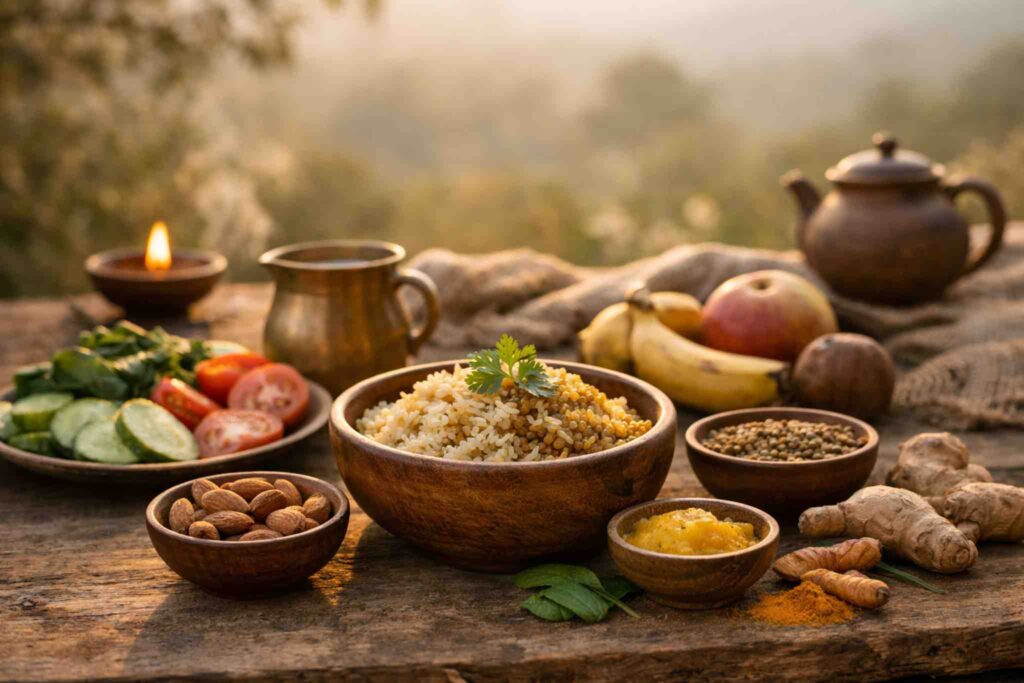
What Is Sattvic Diet Basics?
The term sattva comes from the Sanskrit root meaning purity, harmony, and balance. In yogic philosophy, all of nature expresses three fundamental qualities (gunas):
- Sattva – clarity, harmony, lightness
- Rajas – activity, stimulation, restlessness
- Tamas – heaviness, inertia, dullness
A sattvic diet emphasizes foods believed to increase clarity and balance in the body-mind system.
Core Characteristics of a Sattvic Diet
Traditionally, sattvic foods are:
- Fresh and seasonal
- Plant-based
- Light but nourishing
- Mildly spiced
- Naturally sweet or neutral
- Minimally processed
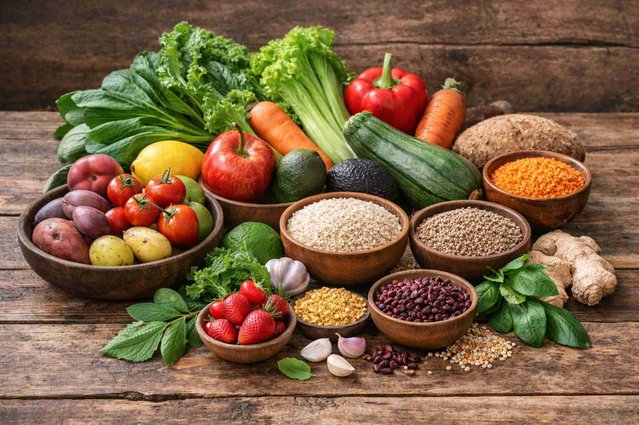
Common examples include:
- Fresh fruits and vegetables
- Whole grains (rice, millet, oats)
- Legumes (mung beans, lentils)
- Nuts and seeds (in moderation)
- Dairy from ethically sourced, well-treated cows (traditionally included)
- Herbal teas
- Ghee (clarified butter)
Foods generally avoided or minimized:
- Excessively spicy, salty, or sour foods
- Deep-fried items
- Processed foods
- Alcohol
- Stale or leftover food
- Overly fermented foods
Context in Modern Nutrition
From a contemporary nutrition perspective, many sattvic recommendations align with:
- Whole-food, plant-forward eating patterns
- Reduced ultra-processed food intake
- Moderate fat and spice use
- Emphasis on fiber-rich ingredients
However, the sattvic diet is not just about nutrients. It also considers:
- Freshness
- Preparation method
- The mental state while cooking
- Mindful eating practices
Ayurvedic Context
In Ayurveda, food is categorized not only by its physical qualities but also by its energetic impact. Sattvic food is considered supportive for:
- Stable digestion (agni)
- Clear perception
- Emotional steadiness
- Meditation
Importantly, Ayurveda personalizes diet based on constitution (prakriti). So the “best sattvic diet basics” for one person may look slightly different for another.
Scientific Perspective
Modern science does not categorize food as sattvic, rajasic, or tamasic. However, research supports many principles embedded in the sattvic diet basics guide.
Whole-Food Plant-Based Patterns
A review published in Nutrients (2019) suggests that diets rich in whole plant foods are associated with improved cardiovascular and metabolic markers.
Source: https://www.mdpi.com/journal/nutrients
Similarly, research in The Lancet (EAT-Lancet Commission, 2019) emphasizes plant-forward dietary patterns for long-term health and sustainability.
Source: https://www.thelancet.com

Gut-Brain Connection
Emerging research on the gut-brain axis highlights how dietary patterns influence mood and cognitive function. A review in Nature Reviews Gastroenterology & Hepatology discusses the bidirectional relationship between gut microbiota and mental health.
Diets rich in fiber, fruits, vegetables, and fermented foods support gut microbial diversity — which is linked to emotional resilience and mental clarity.
Current research is still evolving, but it suggests that dietary patterns emphasizing whole, minimally processed foods may support psychological wellbeing.
Processed Food and Mood
Studies published in journals such as Public Health Nutrition indicate associations between high consumption of ultra-processed foods and increased risk of depressive symptoms. While causation is complex, the correlation is consistent.
Reducing highly processed foods — a key element of sattvic diet basics benefits — aligns with these findings.
Moderation and Balance
The Bhagavad Gita (6.16–17) states:
“Yoga is not for one who eats too much, nor for one who eats too little… For one who is moderate in eating… yoga becomes the destroyer of sorrow.”
This principle of moderation resonates with modern dietary science, which emphasizes balanced intake rather than extremes.
Yogic Wisdom & Inner Wellbeing
In yogic understanding, food influences prana — the vital life force.
Food and Prana
Fresh, naturally grown food is believed to contain higher pranic energy. While modern science measures nutrients rather than prana, freshness often correlates with nutrient density and minimal oxidation.
From a practical lens:
- Fresh meals feel lighter.
- Stale or overly processed food often feels heavy.
Sattva and the Mind
A sattvic diet supports:
- Mental clarity
- Emotional stability
- Improved meditation depth
- Reduced reactivity
Rajasic foods (excess caffeine, spicy food) may increase restlessness.
Tamasic foods (stale, overcooked, processed) may increase lethargy.
For a meditation practitioner, even subtle changes in diet can affect:
- Length of focus
- Breath steadiness
- Emotional fluctuations
The Hatha Yoga Pradipika recommends moderation and purity in diet for serious practitioners, though it does not prescribe rigid rules for everyone.
Beyond Food: Intention Matters
Sattva is not only about ingredients. It is also about:
- Cooking with calm attention
- Eating without distraction
- Offering gratitude
These habits improve parasympathetic activation — supporting digestion and mental ease.
Practical Application: A Grounded Sattvic Diet Basics Guide
You do not need to overhaul your life overnight.
Simple Daily Implementation
Morning
- Warm water upon waking
- Fresh fruit or lightly spiced oatmeal
- Herbal tea

Midday (Main Meal)
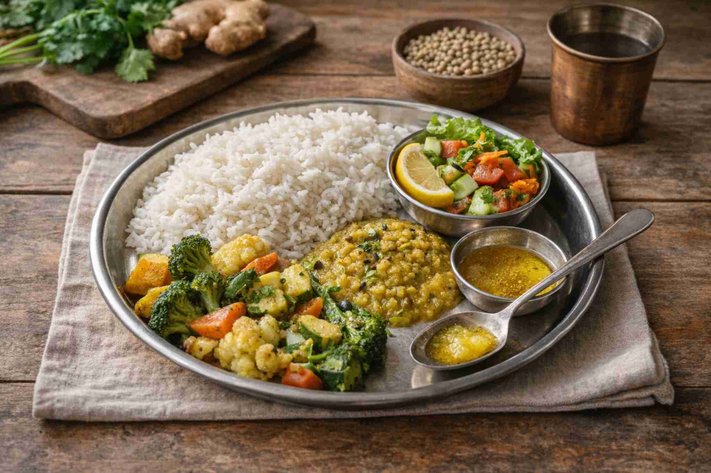
- Rice or millet
- Mung dal or lentils
- Steamed vegetables
- Small amount of ghee
- Fresh salad (if digestion permits)
Evening
- Light soup or khichdi
- Avoid heavy or fried food
Who Benefits Most?
- Meditation practitioners
- Individuals with high stress levels
- Those seeking digestive balance
- People transitioning away from processed foods
Who Should Be Cautious?
- Individuals with specific medical conditions
- Those requiring higher protein intake
- People with certain nutrient deficiencies
A registered dietitian or qualified Ayurvedic practitioner can help personalize.
Common Mistakes
- Becoming overly restrictive
- Eliminating entire food groups unnecessarily
- Ignoring protein intake
- Confusing “bland” with “balanced”
- Eating too little
The best sattvic diet basics approach is steady, not extreme.
Myths & Misconceptions
Myth 1: Sattvic Diet Is Only for Monks
Reality: While rooted in yogic tradition, many principles align with general healthy eating.
Myth 2: It Means No Flavor
Sattvic cooking uses gentle spices — turmeric, cumin, coriander, fennel — enhancing digestion without overstimulation.
Myth 3: It Cures Diseases
There is no credible scientific evidence that a sattvic diet cures diseases. It may support overall wellbeing as part of a balanced lifestyle.
Myth 4: It Requires Expensive Ingredients
Most sattvic staples — rice, lentils, vegetables — are simple and accessible.
Myth 5: Onion and Garlic Are “Bad”
Traditionally categorized as rajasic or tamasic in certain yogic contexts, but nutritionally they contain beneficial compounds. Whether to exclude them depends on your spiritual or digestive goals.
Frequently Asked Questions
1. What are sattvic diet basics in simple terms?
A sattvic diet emphasizes fresh, plant-based, minimally processed foods prepared and eaten mindfully to support clarity and balance.
2. What are the main sattvic diet basics benefits?
Potential benefits include steadier energy, improved digestion, emotional balance, and better meditation quality. Scientific evidence supports whole-food dietary patterns for general health.
3. Is the sattvic diet vegetarian?
Traditionally, yes. It is largely vegetarian, though interpretations vary across regions and traditions.
4. Can I follow sattvic diet basics while working a busy job?
Yes. Simple meal preparation — such as cooking grains and legumes in batches — makes it practical.
5. Is coffee allowed in a sattvic diet?
Traditionally, coffee is considered rajasic due to its stimulating nature. Many practitioners reduce or eliminate it, especially if focusing on meditation.
Conclusion
Food shapes more than our body. It subtly influences how we think, respond, and relate to the world.
The essence of sattvic diet basics is not restriction. It is refinement — choosing food that supports clarity rather than agitation, steadiness rather than heaviness.
Modern research increasingly supports dietary patterns centered on whole, minimally processed plant foods. Yogic wisdom adds another dimension: the inner quality of awareness while eating.
You do not need perfection.
Begin with one mindful meal a day. Cook calmly. Eat slowly. Observe how you feel.
Over time, clarity becomes not something you chase — but something you nourish.